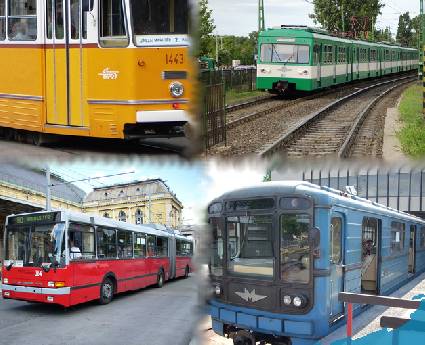
Well, I don't have to tell you that this blog is moribund. The squirrel has given up the ghost. I'm allowing it to do so for a few reasons. First, I have been writing content for a new blog that focuses solely on writing, editing, and publishing. Once the design is settled, I will get the address out there. Second, I have been working to get a backlog of old writing published for Kindle and other hand-held reading devices. The first book is my detestable first novel LUMPEN: A Novel of Prague. It was a bitch to write, and it will be a bitch to read. If you are brave enough, give it a try. I think after me and one very underwhelmed literary agent (who compared the novel to Janet Jackson's Superbowl nipple exposure) nobody has actually read the thing. The brief description is as follows:
A strange, loving but ruthless prostitute, a shadow that stalks its owner, and a new-age skinhead: Welcome to the dark world of John Shirting, a recent arrival in the city of Prague, back in the early 1990s.
Not long ago, Shirting held down a beloved job at Capone-cino’s, a coffee chain and global business powerhouse. When he is deemed ‘too passionate’ about his job, he is let go. Shirting makes it his mission to return to the Capone-cino’s fold by single-handedly breaking into a new market, and making the city of Prague safe for free-market capitalism. Unfortunately, his college nemesis, Theodore Mizen, a certified socialist, has also moved to Prague, and is determined to reverse the Velvet Revolution, one folk song at a time.
It is not long before Shirting’s grasp on his mission and, indeed, his sanity, come undone, leaving him at the mercy of half-bit mafioso, and his own shadow self.
A combination of Monster Magazine and Lord of the Barnyard, with a jigger of Confederacy of Dunces, Lumpen is a dark farce about globalism, expatriates, and coffee.
Ranked From Most to Least Likely to Acknowledge You
1) People in an elevator: In Hungary, very busy, business-minded people take the time to greet you in the elevator, whether you are a colleague or not. It can be confusing, especially as Hungarians say ‘hello’ when leaving.
2) People in the gym locker room: Again, it can be a bit jarring to be pantlessly greeted by a passing stranger. I think they do it for that reason.
3) Bartenders: As with the rest of the civilized world, Budapest has its share of bartenders who take pride in their work, and want you to feel welcome. Usually, though not always, these are the not bartenders who are forced to give their tips up to the management. If you go to a bar long enough, they will even greet you by name, though you will have to wait much longer, sometimes years, to get a buy-back.
4) Homeless: and sometimes they don’t even want money, though usually, they do.
5) Store cashiers: it’s about a 50/50 chance you will get a craggly dragon-lady whose hemorrhoid cream is not up to the task. The good news is that the other 50 percent actually don’t seem to mind that you are giving money to the business that keeps them in a job.
6) Bus drivers: I was brought up to thank a bus driver and say good-bye. I still do, if I exit at the front. Bus drivers are genuinely surprised when you say good-bye to them, and occasionally even wish you a good day.
7) The random Hungarian you met at a party: Ignoring acquaintances is blood sport in Budapest. There are people whom I have met multiple times, had hours of conversation with, who will look deliberately straight through me on the street. It baffles me every time. I have no idea why people behave this way; if you do, please let me know.
8) The random expat you met at a party: The longer they have been living in Budapest, the less likely they are to greet you, having from being iced-out time and time again themselves. Expats in Budapest are a particularly susceptible group and have assimilated the worst habits of their host country; indeed, sometimes they perfect them (sloth, pessimism, cynicism, cronyism).
10) Your neighbor: If this list teaches us one thing, it is that the closer you get to home, the less likely you are going to get on a cozy first name basis with those who cross your path. Older neighbors can be trained to greet you by shamelessly blurting out a ‘Jó napot’ in their faces, but after a while, you begin to see their point: that it is easier to silently pass them by, not acknowledging, unacknowledged.
Matt Henderson Ellis is a freelance manuscript editor and author coach working with writers who publish in print and digitally.
In Paris, fare-hoping has become a popular pastime, as well as a form of civil disobedience; so much so that there is actually a group that – for a small monthly fee – will insure you against the monetary penalty of getting caught. Leave it to the French, who treat sticking it to the man like a national sport (and doing it with such élan!). There is no doubt that such a scheme would fail in Budapest, where – like in my home country – somebody would certainly shout “socialist!”. Being caught red-handed, without a ticket, can be a disconcerting experience. Despite directives against such behavior, the controllers can be a grabby, peevish bunch indeed.
Like many Budapesters I know, I pay most of the time, but bliccel (fare-hop) when economics deem it necessary. I don’t do this with zero pangs of conscious, but the pangs are small and easily chased away: more like pings. From a passenger’s point of view, it makes sense. Three hundred and twenty forints for a few stops up the Grand Boulevard (as the BKV’s site call it) makes common taxi banditry look chivalrous.
But what about the oft-investigated, fund-hemorrhaging public transport company BKV? It turns out, they also have high expectations of their passengers. Which brings me to the real point of this meandering post: the BKV web site. It’s fabulous, for no other reason than they have constructed a little testament of denial, certainly created by people who never ride public transportation. In this case, context is everything. I ask you to pause for a moment, and go to the BKV English language main page. Have a listen to the sound bytes: if you live here, you know these as the jingle the tram makes before the doors close. It is actually kind of a sweet little tune as public transport signals go (is that a harpsichord?). But in real life, having sweated a bumpy ride, the tune sounds nothing but mocking. Real life on the BKV rarely lives up to the site. For instance, in the Terms and Conditions page, it states that it is forbidden “to behave in a way which is scandalous, antisocial or breaches law.” This is clearly a case of double-speak, as one can only benefit from being as anti-social as possible on public transport. Perhaps the porn crew that appropriated the back of an in-service tram for a shoot had researched the BKV and considered what they were doing quite social.
Asking their passengers to refrain from being anti-social and scandalous is optimistic, but further down the accepted-behavior list reveals the authors of the BKV constitution to be delusional. One is forbidden to “travel in filthy clothes or in a drunken state.” Instead of checking tickets, I would dearly love to see controllers sniffing underarms, socks. As for traveling in a drunken state: anyone who has taken it knows that the night bus is not much more than a poor man’s booze cruise.
But the BKV reserves its best for handicapped passengers. It is not enough to arrive at a metro station in a wheel chair to use the lifts: you have to pass both “theoretical and practical exams” to prove your disability. A more motivated writer would uncover just what the ‘theoretical’ aspects of paralysis one must master before being allowed to use Budapest’s public transportation, but – in terms of the practical portion – I am guessing that this is an exam that you pass by failing. You do, however, have the bonus of being allowed to humiliate yourself at either the Mexikói station, or the more luxurious venue of the Széchenyi baths, where the practical exams are administered.
Not long ago, according to pestiside, BKV ran a survey, attempting to analyze exactly why locals fair-hop. The answer seems obvious to me: with their thuggish controllers and silly by-laws, they have created an ‘us against them’ mentality. Instead of just punching your ticket at the metro, you punch, and then submit it for inspection. There is a whiff of subjugation in this act, and from that springs the urge to resist, to bliccel. And anytime there is a dynamic where an individual stands against some monolithic entity – public transport companies included – I have to side with the outlaw. Ride in good heath, fare-hoppers, no matter what your motives, or how antisocial and smelly you may be.
Matt Henderson Ellis is a freelance manuscript editor and author coach working with writers who publish in print and digitally.
Every now and again, an expat makes something of their experiences abroad and publishes a book. In Katherine Shonk’scase, the collection of short stories The Red Passport stemmed from a post-collegiate patch living in Russia in the ‘90s. It has been a long time since she moved back to the US, but the book remains a closely observed, insightful testament to that unique period in history. Though I have yet to successfully negotiate a Shonk story for Pilvax, I was able to catch up with her over email, regarding her recently published novel Happy Now?.
Word Pill: How much did getting an MFA help you in your writing?
KS: My MFA (technically, it was an MA, from the University of Texas at Austin) was most valuable in terms of giving me a solid two years to focus primarily on my writing. I went at a good time, right after I got back from a year in Moscow and had lots of experiences to digest. I had some excellent, dedicated teachers and was with a great group of fellow students, but having the time to write was more important than anything else, and not having much of a social life helped too. For many years before my MA, I had studied fiction writing intensively in classes led by a great teacher in the Chicago area, Fred Shafer. That background has informed my writing practice—specifically, the importance of revision—more than anything else.
Word Pill: When living in Moscow, did you feel that residing outside the USA alienated you as a writer?
KS: I wouldn’t say that I had much of a self-identity, let alone a real identity, as a writer when I was living in Moscow. I was still learning to write stories, and in fact, I hardly did any writing while I was in Moscow. The awkwardness and lack of confidence I felt simply living day to day in Moscow probably translated into an overall lack of confidence in myself as a writer, which may have been why I didn’t write while there. I also felt as if I needed to get some distance on the place before I could absorb the experience of living there and write about it. Actually, it wasn’t until I returned home that I felt alienated from U.S. culture, which motivated me to start writing about Russia, a place that I suddenly missed very much.
Word Pill: Can you tell us a little about the experience of having your novel edited, once it was accepted by your publisher?
KS: I’m lucky to have a wonderfully sharp editor, Gena Hamshaw at Farrar, Straus & Giroux, who felt passionately about my book. The editing process began with Gena writing me a long letter that suggested four fairly significant changes (as well as a list of smaller ones) to the book. Initially, I resisted each of Gena’s major suggestions, but the more I thought about them, the more I realized they were all spot-on. Most notably, she thought that I should have my main character, Claire, read her husband’s suicide note near the middle of the book rather than at the end, where I had originally placed it. Moving the note to the middle of the book ended up giving Claire more time to react to it and, I believe, deepens the mystery of her husband’s death. After that first round of editing with Gena, we cleared up some loose ends, and then the book was copyedited and proofread a total of three or four times. It’s an exhaustive process that leaves you feeling pretty confident about not finding typos in the published version.
Word Pill: Are there aspects of autobiography in your novel Happy Now?
KS: I adapted a lot of incidents from my own life to Claire’s, such as dealing with a cat who eats a poisonous flower, driving on Lake Shore Drive in a blizzard, and Internet dating in my mid-thirties. Writing the novel was a little like building a nest, with some of the twigs taken from my own life and others imagined. Some of Claire’s personal struggles mirror my own, though I imagined her more traumatic experiences, such as her parents’ divorce and, obviously, the loss of her husband.
Word Pill: Any advice for beginning writers?
KS: Read a lot. Cultivate the practice of revision, and learn to enjoy it: Don’t be satisfied with your first draft or even your tenth. Find a community of writers who you trust to give honest, thoughtful feedback. Grow a thick skin, because you’ll probably deal with a lot of rejection. Find a day job that gives you time to write. Teaching isn’t always the best job for a writer because it can be so time consuming and exhausting, especially for introverts. Editing has worked much better for me.
Matt Henderson Ellis is a freelancemanuscript editor and author coach working with writers who publish in print and digitally.
In the third issue of Pilvax, I had a chance to work with one of Hungary’s most esteemed Gypsy painters, Mara Olah—known more commonly as Omara. Originally, Omara was supposed to supply the occasional line drawings that we use to break up the text of the stories and poetry. Due to a printer’s error, two of her drawings came out faded and blotchy. Because we deal with such a limited print run, I was able to convince Omara to hand-draw the original illustrations directly into the magazine, making a unique work of art out of each copy. So, on a summer day, with two plastic Spar bags filled with magazines, Pilvax co-founder Aaron and I set out for Omara’s small country house, a few hours outside of Budapest.
With no street name or address, the house would have been difficult to find but for the fact that she was well known around the village. Omara greeted us by the gate of a trailer-sized abode, a woman approaching old-age, with a few missing teeth, trailed by a flurry of black hair. She led us into the house, warning us to avoid the well-sized pit in the front room. Before we had time to get comfortable, Omara insisted that she needed a shower. That was fine with us, though it turned out that Omara’s shower was a cold-water pump in the open air, out back. Aaron and I waited, avoiding looking out the window. Omara returned, wearing a towel, hair loose, looking refreshed if not a bit wild. Now it is your turn, she insisted. Our turn? For what? For a shower. Not for the last time, I would pretend not to understand Hungarian.
Still in her towel, Omara gave us a tour of the small house that she was building herself, by hand. The pit in the center of the floor? That would be the swimming pool. With almost anybody else, you would think they were joking. But one thing was clear to us early on: if Omara wanted to dig herself a swimming pool that took up half a room in a two-room house, that is what she was going to do.
Before we discussed work, Omara proudly showed us her press clippings: pictures of her with visiting foreign dignitaries, Hungarian celebrities and politicians, an article in Népszabadság, that emphasized her great love of taxicabs (Omara only traveled in taxis, not by train, never by bus). Then she told us it was time to go to work: but not at home. Only in a restaurant. Not to worry, she had already called a taxi.
Before arriving the inn, Omara had the cab stop at a green-grocer’s to pick up a watermelon. She loved watermelon, and chose the largest one. Now, you would think that an old gypsy woman walking into a restaurant with her own watermelon in tow would be an unwelcome surprise to most Hungarian waiters. But, no, the unflappable country waiters dutifully brought out plates and sliced up Omara’s melon for her, free of charge. Being one Hungary’s most illustrious painters has its benefits.
So, with colored pencils, we began to illustrate our 200 Pilvax’s, each of us contributing to the final result. Not much conversation transpired during the work; Aaron and I sipped beer, Omara slurped watermelon.
In her dealings with the waiters, and with us, one thing became clear: Omara was very conscious of the fact that she was Roma—playing it up for her audience, and using it to excuse herself from the mundane constraints of decorum. It seemed to be as much a tool as a part of her identity. Or, perhaps it wasn’t her ethnicity, which somebody like me – white, foreign – is so prepared, even eager, to experience. Mabye Omara was just an authentic artist, living by inner, constantly changing dictates.
Either way, there was obviously a lot more to Omara than a cartoonish, eccentric Gypsy woman. Early on in our visit, Omara had given me a painting. It was a deep-blue portrait of a beach-side house, dedicated to her daughter. The child-like subjects appear to inhabit a ghost world, indistinct and elegiac. Like her illustrations, it is a bit disturbing, and full of sorrow. It hangs on my wall, but it is not pleasurable to look at. But still, like any good painting, it seems to convey some truth or feeling that cannot be articulated with words.
The illustration job took longer than we had anticipated, and after the sun had fallen Omara announced she was too tired to continue. We had only made it through half the magazines, but editorial concerns had been set aside early on. It was obvious that we were indebted to the sloppy printing job—I think Aaron and I both fell a little in love with Omara that day.
Aaron and I took a room in the inn, and somehow Omara would make her way home. She had already refused money (though it was clear she didn’t have any of her own) and we were miles from her house.
Omara, how will you get back? I asked. However God wills it, she said, gazing up at the sky. Then, after a deep breath, looking sage and oddly alluring, she intoned: call me a cab.
Matt Henderson Ellis is a freelance manuscript editor and author coach working with writers who publish in print and digitally.
Thanks to Sarah 'Colbert' Gancher for turning me on to the kitchiest of retro-Hungarian videos. Be sure you stick around for the chicken boiling. Ladies and gentleman: Z' Zi Labor.
Every now and again we get some submissions that won't fit into the coming issue of Pilvax, but are too good not to pass along. Such was the case with the poetry of Lenore Weiss, daughter of Hungarian emigrants to America. Enjoy these two poems that are part of a cycle about Lenore's mother, and drop her a line if you like them.
Coffee with Mom
"Those busy arms of yours are cool now like this river with its broad silence winding soft and slow."
--Attila József, Sleep Quietly Now
The removal of a kidney brought you downtown, yours didn't come out, but Daddy's did, buying him coffee with a cheese danish from across the street, whatever it took to make a red light turn green again.
He had five more years left on the books, marked by a daily dose of dipping his hands in the waters of acetone to terminal cancer. Better than staying in Hungary during the War and becoming a ghost on a railroad train. Choose your poison. You left early, survivors
stuffing everything inside a back pocket, desperadoes who taught me to ride standing up without losing my balance. And so here I am.
You want to know if I've been taking good care of myself. Yes, I say. I have. Afterward, we talk about the children, there are no grand kids yet, catching up on how the world's been doing playing Disney on high-def sets,
wars, the presidency, and all the rest, and how everything is getting smaller and costing more money. Money. How it runs out like time, the bottom of your change jar with two pennies.
The Cymbalon and the Oud
A cymbalon and an oud Growing out from the grass Where a headstone beckons For me to come closer.
It's my mother, Powdering herself with Silent Night Under her arms, between her breasts. She's busy and doesn't notice When I sit down, Measures a tablespoon of baby oil Into her palm and smears her face, Turns into a finger painting With her nose on a plate.
She always had a sense of humor but now Has become someone I don't recognize. Disappears into her boudoir Leaving only a smell And a trace of powder.
Gone for all those times I needed to know what to do. The hammer of the cymbalon And the cry of the oud Is all she'll say.
Lenore Weiss is a poet, writer, and editor of Hungarian heritage who now lives in Oakland, California. Both of her parents came to the United States and settled in New York City where she was raised with her two sisters. Her father was a medal-winning soccer player and gymnast. Her mother had a uniquely strange sense of humor and knew how to bake cakes filled with delicious lekvár. She died more than 40 years ago. Lenore wishes she could sit down and have coffee with her Mom today with a slice of her cake. Lenore's email is: lenoreweiss@sbcglobal.net. She also serves as the fiction editor of the November 3rd Club.
5. Tokaj Aszú: Perhaps the wine of kings is virtually unknown in America because we have no tradition of royalty, or due to the fact that dessert wines don't figure into many menus. Or perhaps it is the price that is prohibitive, a modest 3 puttonyos bottle could set you back close to a hundred dollars at a wine shop. But in Hungary, Tokaj Aszú – made from grapes that have attained a 'noble rot ' on the vine – is available relatively inexpensively by the bottle – or by the glass at any of any upscale bar.
4. Tisza Trainers: Retro-hip has never been cooler in Budapest, especially to a generation that is discovering kitsch and didn't have to endure the repression of the Soviet-imposed socialist regime. This re-fangled brand of shoe updates the omnipresent state-owned Tisza trainer, to fantastic results. It is only a matter of time before Japanese shoe fetishists catch on.
3. Tomatoes: Try this: cut out the stem at the top of a summertime tomato, put it to your lips and suck. What you get is a burst of pure tomato flavor that might as well be another fruit from the pale, grainy supermarket-bought American variety. True, tomatoes are not originally Hungarian – not by a long shot – and they don't use them in cooking as much as they do in the Balkans, but a Hungarian tomato is one of our true simple seasonal pleasures.
2. Mangalica pork: believe the hype. The rescue of this species of wooly pig from near extinction and its ascension as a sought-after gourmet foodstuff is already well documented, so much so that it has become popular to bash the trendy pig. But there is a good reason mangalica it has found its way onto the menus of America’s most esteemed restaurants: the meat is beautifully marbled and fantastically rich. That'll do, pig.
1. Le Parfum perfumes: Using scents of derived from such whimsical sources as absinthe and smoky lapsang souchong tea, Zsolt Zólyomi’s perfumes, which he creates for his own line as well as already existing brands, are inventive and exclusive. But expect no Eastern European budget shopping here: prices of his artisan perfumes run close to $ 150 for a 100-ml size bottle. For a longer treatment of Le Parfum, and an interview with Zolt, stay tuned.
Matt Henderson Ellis is a freelance manuscript editor and author coach working with writers who publish in print and digitally.
It is ironic that British expatriate Peter Strickland– writer and director of the lauded, soon-to-be released Katalin Varga, is getting a lot of attention abroad, from invitations to film festivals in Taipei and Mumbai, to the cover of Sight and Sound magazine suggesting he has made the best British film of the year. His first feature, seeded with his own money, has made barely a ripple in Hungary, his adoptive home. Indeed, the Budapest film community should have been the first to champion Katalin Varga (shot in Transylvania with a Hungarian-speaking cast) for no other reason that it is destine to reflect well on local film-making. Instead, a film that has already won a coveted Silver Bear at the Berlin Film Festival, has thus far been ignored or subjected to hostile attacks regarding its politics. But I don’t want to dwell on the negative, because I have seen Katalin Varga on video and at a screening at Urania, and there is a much better story than the predictable local cynicism.
The film Katalin Varga is an enormous artistic achievement, and the making of it is a triumph of will and commitment to a dream. Though Strickland and his producers bill the film as a ‘revenge movie’ Katalin Varga really defies genre pigeon-holing. It is something a horror movie without a monster, or one of Grimm’s darker fairy-tales without supernatural intervention. It is an Eastern European gothic, which derives as much from Flannery O’Conner as Tarr Béla. The powerfully told story of a woman traveling across Transylvania to confront the man who raped her is told with minimal reliance on dialogue. Instead, the elegiac, forebodingly beautiful landscapes of Transylvania almost appear to narrate the story. Like baron, icy Nordic panorama in Lars Van Trier’s Breaking the Waves, the setting is a character in itself. But the most notable aspect, from this writer’s point of view, is that Katalin Varga is a work of outsider art which was written and filmed without compromise, and is succeeding in commercial release. Every aspiring filmmaker should take note and draw inspiration: despite the manifold obstacles and nay-sayers, it can be done.
Below find a brief interview with Peter Strickland about the making of Katalin Varga, and some of the reaction the film has received thus far.
Mókus: What has been the difference in the reaction from Hungarian film community and those at the international festivals?
Peter Strickland: Katalin Varga has yet to come out in Hungary, so I can’t gauge or compare the reaction. In general, the film has already fallen into some ridiculous and protracted arguments about its nationality or identity. It’s really tiresome and pointless, but one that always comes up. For me, film is mostly meta-national in that it's beyond nationality. With co-productions now, film-making is such a fluid process in terms of countries involved. If a story is specific to a country, locale or culture, then it can be national, but if we’re talking about a story non-specific to its environment, then that question about nationality really isn’t relevant. Some people say Katalin Varga is not British because it’s in Hungarian and Romanian, filmed in Romania with a Hungarian crew and post-produced in Hungary. Some people say the film is not Romanian because I’m not Romanian, the film is mostly in Hungarian with a Hungarian cast and crew and post-produced in Hungary. Some people say the film is not Hungarian because I’m not Hungarian and we filmed it in Romania. It’s quite surprising how rigid some people can be. Even national football teams are more flexible than this. For me, the film takes place in my world. I embraced some elements from the Szekély region – the rhythm, the Catholicism, the connection to the earth, but overall I would be an impostor to say I made a film about Transylvania. The characters you find in my film could be found anywhere. We portrayed the region as this hostile, forbidding world, but that couldn’t be further from the truth. I chose to make the film in Transylvania because it had that epic canvas, it had the ingredients needed for a ballad already embedded in its bloodstream and most of all, because of Hilda Peter and the actors in whom I trusted. Even if we had millions of pounds, I still would have chosen Transylvania. The question of authenticity will always come up when making a film and as an outsider, I had to think very carefully about how I portray an existing place even though the villages in the film are fictitious. Ultimately, audiences in Hungary and Romania will be the harshest critics simply because they know the region and culture. Film-makers have to accept that wherever they shoot. If someone from Hungary or Romania expects to see an authentic representation of Transylvania with this film, then the chances are that they'll be disappointed. Saying that, outsiders have an advantage as they can offer a slant on an existing landscape. One can't deny the formidable influence of foreign blood on British cinema starting with Emeric Pressburger.
Mókus: How would you respond to questions of misogyny in your film?
Peter Strickland: Almost every man in Katalin Varga is flawed with pride, aggression, chauvinism, and hypocrisy. Yet nobody has once accused me of hating men. True, the female characters in the film do suffer because of men, but if someone wants to equate that with misogyny, then there’s not much I can do to change that opinion. Contempt towards women is certainly present throughout Katalin Varga, but does that mean the film itself embodies misogyny?
Mókus: How much of the film (particularly in atmosphere, scene, and sound) did you discover on set once shooting began?
Peter Strickland: The film I wrote and the film that we made are two entirely separate things. The roads, houses, and terrain that drove the script never existed and it is very strange to force myself to think back to how the film looked in my head prior to shooting. Because I spent a lot of time preparing for the shoot, I knew what to expect in terms of the environment we were shooting in. So much of the time, we took advantage of the spaces we were shooting in and I chose them because they served the atmosphere of the film. We didn’t dress or design any sets. Everything is how you see it, apart from moving a few logs every now and then. The weather in the Carpathians is unpredictable. You can have four seasons in one scene. The film was difficult to grade in post-production because of the sun and the clouds being so volatile. If you look at the rushes of the lake scene, the light continuity is all over the place. This is probably one of the few films where thunder had to be taken out instead of put in. There was so much thunder during shooting, that it felt too Gothic to leave it all in. However, we were very lucky and at times the weather almost became a collaborator. When it rained during the lake scene, I almost shouted ‘Cut’ from the other boat, but since I noticed how Hilda was so lost in what she was doing, I just stayed out of it and that’s the best thing I didn’t do during the shoot. I thought it would look ridiculous with the rain, but what was on the screen was so serendipitous in terms of the ripples and the refraction of the light at just the right moment. It seemed as if Hilda and the weather had made some secret rehearsal together.
With the sound, most of the film was artificially constructed. We didn’t get so much good atmosphere during the shoot. The dialog recordings by Zoltán Karaszek were fine, but to get good atmosphere takes time and luck. We only had seventeen days of shooting. We put a few hours aside one night to record some frogs and general atmosphere, but the police stopped us and they took forever checking our ID cards, so I had to source recordings from elsewhere in post-production.
I went to Transylvania in 2004 with Clive Graham to start on insect and goat bell recordings. Clive recorded some good material and we combined that with a few of Zoltán’s pieces. The sound team during post-production also brought in their field recordings. György Kovács had some incredible recordings he made of wind, dogs and other things. Some elements that you would think were just there in the background during shooting took months to fit in. There is one scene with a scops owl hooting in the background. I spent months looking for the right sound, partly because I wanted to pay tribute to Luc Ferrari’s Presque Rien, which is one of my favorite records. I found the best scops owl recording through the National Sound Archive in London and the owl comes from Cserépfalu in Hungary recorded by the English ornithologist, Alan Burbidge. Quite a lot of birdsong comes from my record collection. The lake scene is 90 percent artificial when it comes to sound. Hilda overdubbed her lines a year later. The rain, the wind and the oars are all carefully positioned and layered on Pro Tools. I love that process of making a film and there is a high degree of sonic artifice to what we did. Transylvania does not sound so intense.
Mókus: Why did you elect to subtitle with Hungarian speakers rather than dub or use English-speaking actors?
Peter Strickland: There was no question about doing the film in any language other than those spoken by the actors. I remember speaking to an English film person about the project and as soon as I said the language would not be in English, he backed off and told me to forget about it. One executive in London refused to even look at a 3-minute clip of the film because it was in Hungarian and Romanian. I had the DVD on my person. I was in his office, which had a DVD player and he still said ‘no.’ One can’t deny that you lose a certain audience once you have subtitles in a film, but equally you lose another audience if you have non-English characters speaking to each other in English.
Films should be in the tongue of the characters’ nationalities. It’s not about authenticity or understanding, but it is about entering the mindset of a character through the tempo, the texture of language. Characters should be universal, but they can only be made so when they are true to their own voice and train of thought, and only then can we believe in them. Hilda and the actors brought something unique to Katalin Varga with their language. It would have been a very different film with a different rhythm alien to that region, had we made it in English.
Foreign literature has to be available in English because we only have text, but with film it’s different. The timbre of the voice when it is in its own linguistic environment conveys something far richer than when speaking in English if it is not the mother tongue. Spoken language corresponds with body language and everything is so intertwined when it's in the language it should be in. If we're having non-English actors speak in English because that's what their characters do, then that's fine.
Paradoxically, making a foreign character more accessible through English language only serves to distance the audience. So many historical films do this. It’s bullshit and I hate the way that they patronize an audience in this fashion. It’s a dictate purely fuelled by commercialism. How about we make a film about Winston Churchill talking to Franklin Roosevelt in German, but with the accent of an English person speaking German? It sounds ludicrous, but no more ludicrous than what we do with our representation of foreign characters. Saying that, I’m quite a fan of ‘Dad’s Army’. I’d forgive that show anything.
In terms of how challenging it was for me to direct a film in a language I didn't know well? It was fine for me, only because the cast and crew spoke such good English and they were incredibly astute in terms of understanding what was needed for the characters. The credit goes to them.
Mókus: How have you balanced day-to day needs of living and making money with the huge commitment of the film?
Peter Strickland: Throughout the ‘90s, I balanced day jobs with film and music activities. It was possible then because youth was on my side. When you’re in your twenties, you can go to an employment agency and pick up a basic job whenever you need to and with relative ease. When I moved back to Reading in 2007, at the age of 34, it wasn’t so easy to find a job either there or in London. The law states that you can’t be discriminated against because of age, but the reality is somewhat different. If you’re moving between jobs within your chosen profession or field, age can almost be to your advantage. However, if you have a complete career change or start looking for a job when you have huge holes in your CV, then age is definitely against you. After Katalin Varga failed in September 2007, I just tried to think about staying afloat financially and getting work in. I’d had enough of film and being treated like a prostitute by certain people in the industry. I tried to go for something similar, such as copy writing and built up a CV of fake paper adverts. The reaction in London was, ‘why hire someone inexperienced who is 34, when we can get someone fresh out of university?’
When applying for regular jobs, I learnt my lesson during the ‘90s, and that was to never put down more than a cursory interest in film on my CV. Once you claim any aspiration towards film-making on your CV, at best you are regarded as a dreamer. Even if they like you, from their point of view, they will see that your heart is not in the job and you’ll jump ship when something better comes along. So for me, after having spent years away making Katalin Varga, constructing a CV was a real challenge. My CV basically consisted of elaborate lies and fake firms with friends disguised as employment contacts. I couldn't say I had made a film. It was a crushing time for me to go back and plead for the most basic data entry jobs and be treated like a drifting loser by people ten years younger than me. Some people were very supportive, but the usual reaction was to regard a thirty-something, bald, unemployed man living with his mother as something that blew in with the trash. Who gives a hoot whether you put all that effort into a film? People only pay attention once you have some kind of ‘branding’ – be it an award or distribution company behind you. Everyone loves to champion an underdog, but it’s a lie, as one has to already be a successful underdog in order to be championed. A huge difference. ‘Katalin Varga’ is now a comparatively successful underdog story, but what about all the other people struggling to make films? I don’t think my story and situation is so unique, and that’s why I talk about it at length. It is relevant to other film-makers. We delude ourselves that we break into the industry because of our talent, but it’s more because of luck than talent.
The conventional route during the ‘90s was to do work experience if you could afford to do it. I saved up enough money to work for a pop video production company for free for one month and it was thoroughly wretched. You think that you’ll gain some kind of useful computer skill or on-set experience, but you’re just told to copy from one Beta tape to another and go to the post office. If you complain, you’re very aware that there is a whole queue of people desperate to take your place. You're at the butt-end of the industry and that reinforced my idea about getting away from some vile people and being independent, taking a good day job unrelated to cinema and just doing film and music stuff with my friends during the evenings and weekends. It was an amazing and empowering time for us.
I did have some great day jobs – Edexcel, the examination board in London was one. Because it’s run mainly by ex-teachers, there isn’t the usual preoccupation with status and money. The majority of them were incredibly supportive of employees who harbored their own passions. When I worked at that company, I could work with my friends on music. With music you could do that because it was relatively cheap to produce. We could afford to be uncompromising and make financial losses. I put a huge amount of work and love into producing a seven-inch single of entomology recordings by Jim Reynolds and David Ragge, and we only sold around fifty copies. It didn’t matter and it was very liberating that we could act as purists. Film is too prohibitively expensive for that. So you are forced by its very financial nature to network, to get in there somehow and to convince people that they will see a return on their money.
I wasn't any good at networking or meeting people and when I ended up with an inheritance of 30,000 euros, I used it to shoot and edit Katalin Varga. That money went a long way. I had a steady and very flexible job in Slovakia at that time, so I could support myself and pay rent with my earnings and use the inheritance purely to fund the film. That was a very strange period of my life. I had lost my father and his brother within a few years. That was the only immediate English side of my family (my mother is Greek), so a huge change was forced upon me. A whole way of life had gone, so going further into Europe made sense. A few years later, the inheritance from this fuelled an incredibly optimistic bout of aggressive energy to make this film and just do what was always denied to me. I just felt I could work. It was so liberating to actually work and do what I always wanted regardless of future consequences. The chances were clearly that we would fail on the lack of money and experience we had, but I was so fired-up, I just threw myself into it. I was lucky in a sense because my family never discouraged me, even though they feared the consequences, so there was always a sense of good will despite the ridicule I faced outside the home. My uncle refused to watch any film made post-1960 and only cared about Jacques Tati or the Marx Brothers, so it's somewhat ironic his money went towards this. However, that money dried up during post-production in 2007, I lost my job in Slovakia and the rot set in very rapidly.
I fell into teaching in 2008 and that became a revelation for me. With all these data entry jobs, I could get away with being stubborn, lazy, and irresponsible, but with teaching, one has to embrace the inherent responsibility it entails and it does force you to forget your own troubles and give something of your personality and experience to other people. There is no space for one to dwell and consequently it does become uplifting and enriching. The danger with teaching abroad (and you really feel this when some English teachers you meet are also struggling musicians, writers, artists, or film-makers and often beset with alcohol problems) is that it’s viewed as a stopgap instead of something that can enhance your worldview, especially when teaching adults. Teaching is something I would never want to give up entirely.
The mistake I made during the ‘90s was to settle for non-committal data-entry jobs in offices. Easy to get into, easy to do, and easy to get out of, and the rest of the day is yours. However, that denied me a back-up career. One could argue that a back-up career is self-defeating because you can inevitably fall into it out of comfort, but at least you can pay the bills. The last decade was strange for me. I envied my friends with regular jobs because they had security and comfort. They envied me because I was pursuing my dreams. It would be difficult to advise others on what to do. One piece of luck got me to where I am now and that plays such a vital part. I gave a new script to Oana and Tudor Giurgiu from Libra Film along with a rough cut of Katalin Varga as an example of previous work. They didn’t like the script, but asked why the rough cut wasn’t finished and from that moment on, they sourced money to finish the post-production, a sales agent came on board, Berlin invited the film and so on. It had been eight months since I blew my money and abandoned the film, and suddenly it very quickly sprang back to life.
I’m slowly trying to piece together a comprehensive CV of all my jobs, which so far total over fifty. This is the reality for most people who are middle or working class and without connections or luck. The grip of elitism and nepotism in some places is stifling, and there are some very talented people I know who sadly have all the odds against them just because they don’t have connections through their families. Of course there are hugely talented film-makers who come from film industry families and they can put maybe 60 percent of their perspiration into making great films, but the one thing some of them fail to recognize is that for the rest of us, the act of making a film is only a fraction of our work. 99 percent of our perspiration goes towards getting into the position where we can actually begin to make a film – the endless application forms, waiting, rejection, phone-calling, hustling, and balancing that with day jobs. The whole of the ‘90s flew by on that generic response to an application — ‘you’ll get your answer in another two weeks.’ If you’ve spent a decade waiting ‘another two weeks’ for that letter, phone call, or e-mail, it’s very easy to understand how you’d use an inheritance to make a film instead of putting a deposit on a flat.
Saying all this, I've known of some people who just get that insanely lucky break at a young age — right place, right time, and that's it. Yet strangely I don’t regret that struggle. I’m a big fan of the TV series, ‘The Office’ and part of its power is in transforming such a frustrating part of my life into something very funny. I’m almost nostalgic for those endless weeks typing in codes into computers in sterile offices, dreaming of escape and what I could do for my first film. Those hours and hours of bone idle dreaming definitely fuelled that drive to make a film.
The District IX market hall is basically a decked-out airplane hanger for produce. It impresses at first blush, but it doesn't take long to realize that an eggplant looks the same in Hungary as it does at home. It is left to the vendors to give the place some local flavor. A butcher at Vásárcsarnok once tried to sell me cow cheeks (which they don’t even put on display – they are so unsightly and unpopular) for a higher price than an equivalent quantity of a prime mangalica cut. He succeeded (crafty bastard) in selling me ground beef at twice the going rate. Central Market? Try, Central Mark-up. Happy Alternative: District V Csarnok
Also designed by Gustave Eiffel, it is the Vásárcsarnok in miniature, without the busloads of Koreans, and without the attitude.
4. Szentendre
Aside from a few good museums, the charm of Szentrenre still eludes me. A small – albeit picturesque town – with big city prices. Most of what you find, aside from the most gaudy of Hungarian craft souvenirs, are other tourists wandering around looking at each other, wondering why every travel book insists Szentendre is an essential part of their itinerary. Happy Alternative: Vác
Equally small and picturesque, with a few great produce and flea markets, Vác is an under-touristed gem. An excellent starting point for expeditions into the Bukk hills, and you don’t have to suffer the HEV to get there.
3. Váci U.
Featuring low-rent brands that pass for luxury shopping in Budapest, Váci is perhaps the last street in Budapest I would elect to show a visiting friend. With the konzum lányok, professional beggars, and bus tour ticket hawkers making forward motion a chore, it's not even all that pretty a walk. Happy Alternative: Király Ut.
Before Andrássy was built, Budapest’s gentry paraded up and down Király, the city's most elegant shopping street. Though it lost its high-end status long ago, Király has retained its charm. From haute-cuisine to budget dining, 24-hour dentists, hipster bookshops, and a few of Pest’s best bars, Király is a more authentic representation of the city than Váci, or, these days, Andrássy.
2. Gundel
A former irreproachable bastion of Budapest fine-dining, it is now the favorite spot of reality clown Győzika. Enough said. Happy Alternative: Klassz
There are always inventive takes on local produce for very reasonable prices at Klassz, which is why it is full every night. The menu changes every few months, but they always have goose liver (still legal in Hungary!) and much-hyped mangalica pork on offer. As Klassz is partnered with the Wine Society, their wine list is amongst the best in the city.
1. Lánc Híd
Hungarians love their fancified Chain Bridge. But in the scheme of great European bridges, it pales. Go to Prague if you want spectacular bridges. The Chain Bridge connects the equally over-rated Castle District with bone dry Roosevelt Square, making it all that much more avoidable. Happy Alternative: Szabadság Híd
This is an honest, elegant, working-man’s bridge. Patina-green Szabadság just received a huge renovation and is open again for business, with its wonderful views of the Danube from the southern part of central Budapest. Connecting lovely Gellért Hill with Fővám Tér, Szabadság Bridge is also the top choice of jumpers. What is more Hungarian than that?
Matt Henderson Ellis is a freelance manuscript editor and author coach working with writers who publish in print and digitally.